Pillars

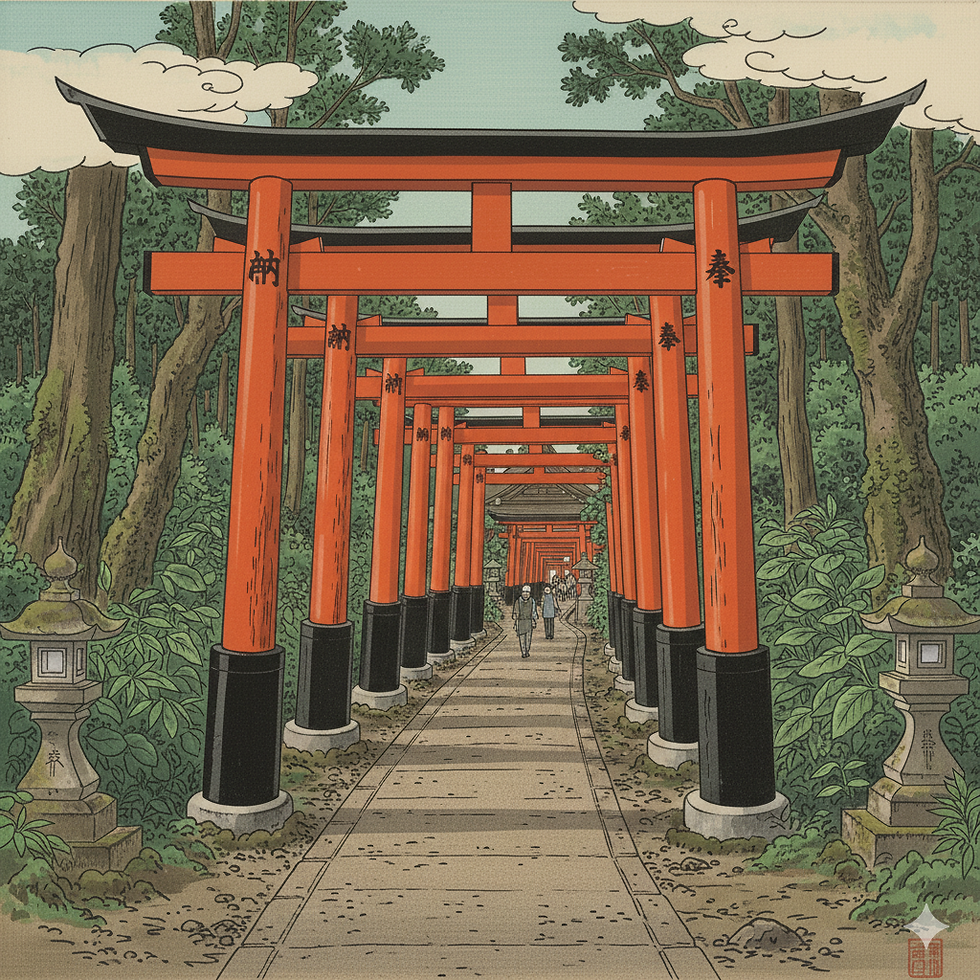
The two “pillars” of the Toyota Production System are Jidouka and Just-in-Time.
“Pillars.”
Because Taiichi Ohno explained this in such a way, we see visuals of the house of TPS. It is essentially pulled by the perception of the “pillar” and resembles a Greek temple. The trend continues: you will see something like eight (or more) pillars of TPM, etc. There is a perception that the more pillars we have, the better our ‘temple’ looks.
A thought. In Japanese Shintoism, a pillar represents a god. The unit for counting gods in this polytheism is a pillar. Some shrines have multiple gods; we need to count them. In such a case, we use the pillar as the unit of count.
It is unclear why we count by pillars. Some say this is because the Japanese believed that Gods live in trees. There are still many ceremonies that use a huge pillar as the main monument. Yet we also believe that Gods live in many places and things, such as rocks, waterfalls, and mountains. This trend of counting Gods continues today. For example, in the Manga “Demon Slayers,” the main captains of the Demon Slayer team were called the Hashira, or the pillars. This is because they possess god-like power and fight against the Demons. Also, many traditions use the pillar as a symbol of God. In Shinto, the pillar has a direct connection to God.
In Shintoism, “Gods are everywhere,” and this belief is blended into every aspect of life.
Given the word's cultural background, isn’t there a different way to interpret Jidouka and Just-In-Time as the two pillars of TPS?
If something is a pillar of a house, it needs to be rigid. It is designed from the outset, built, and never changed. My underestimation of construction might be wrong, but we won’t improve a pillar. If we need to improve, it’s a major construction project, or we might as well rebuild the whole thing. Such an image doesn’t align with Kaizen.
Japanese shrines are everywhere in Japan. There are about 80,000 shrines in Japan, most dedicated to multiple gods. We joke that we have more shrines than convenience stores (about 50,000 convenience stores in Japan). In addition to shrines, there are numerous Hokora, small shrine-like figures, everywhere.
This applies everywhere to Jidouka and Just-in-Time. Just because there's Pokayoke doesn’t mean it’s Jidouka. Just because there’s Kanban doesn’t mean it’s Just-in-Time. Every process should use Jidouka and Just-in-Time. This means every standardized work should have:
Jidouka: a way to know whether the work just done was right. If any fluctuations pull, ask for help and find a spot to stop.
Just in time: each process knows when to start what work. They should have the beat of accomplishing the tasks.
There is also a sad story. Of the 80,000 shrines, not all are in good condition. Most are in poor condition. I don’t want to name those shrines, but some are related to my ancestor. If the descendants don’t use the shrine every day, it will collapse. Because these shrines are made of wood, many require periodic maintenance or rebuilding. Some are moved every 20 to 60 years, while others are rebuilt. Such an event is typical for the big ones. But the small ones are in constant need of support.
Jidouka and Just-In-Time are the same thing. These are not phrases you use during a workshop or a quarterly review. They are not something you put on posters and in textbooks and then forget about. These two are things we should use every cycle. They become powerful only when we use them within standardized work. Also, these concepts need Kaizen. Without Kaizen, Jidoka, and Just-In-Time, the system will decay.
I do not intend to say, "Let’s not use the house.” I think that’s an interesting summary. All I wanted to show was the different associations we get from a single word.


Comments